
Washington & Oregon Building Performance Standards: How To Start BPS Compliance The Right Way
Building performance standards are no longer optional in Washington and Oregon, and the owners who act early are the ones avoiding fines, stress, and rushed decisions later.
Both states have adopted Building Performance Standards (BPS) that require commercial buildings to meet specific energy performance benchmarks over time. While the laws share a common goal, the timelines, requirements, and first steps differ. This guide explains what the Washington Building Performance Standard and Oregon Building Performance Standard require, and how to begin compliance the right way.
Building Performance Standards Are Designed To Change Outcomes, Not Just Reporting
BPS laws exist to reduce energy use in buildings, not just to collect paperwork.
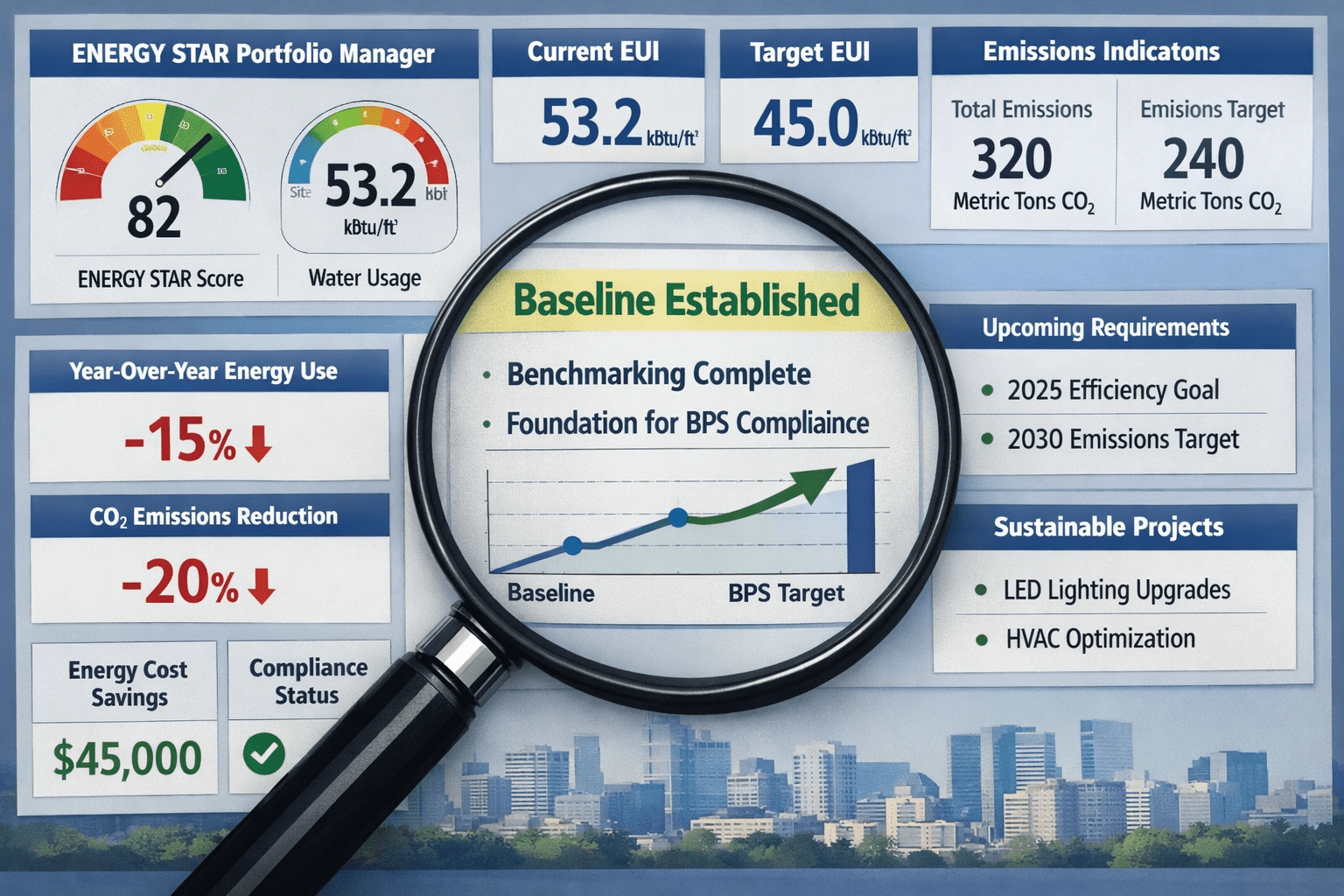
Unlike benchmarking ordinances that focus on reporting energy data, building performance standards require owners to improve performance over time. States measure outcomes using energy use intensity (EUI), emissions targets, or ENERGY STAR thresholds. Buildings that fail to meet targets must take corrective action or face penalties.
Understanding this difference early matters, because compliance is not a one-time task. It is an ongoing process that affects planning, budgeting, and long-term building strategy.
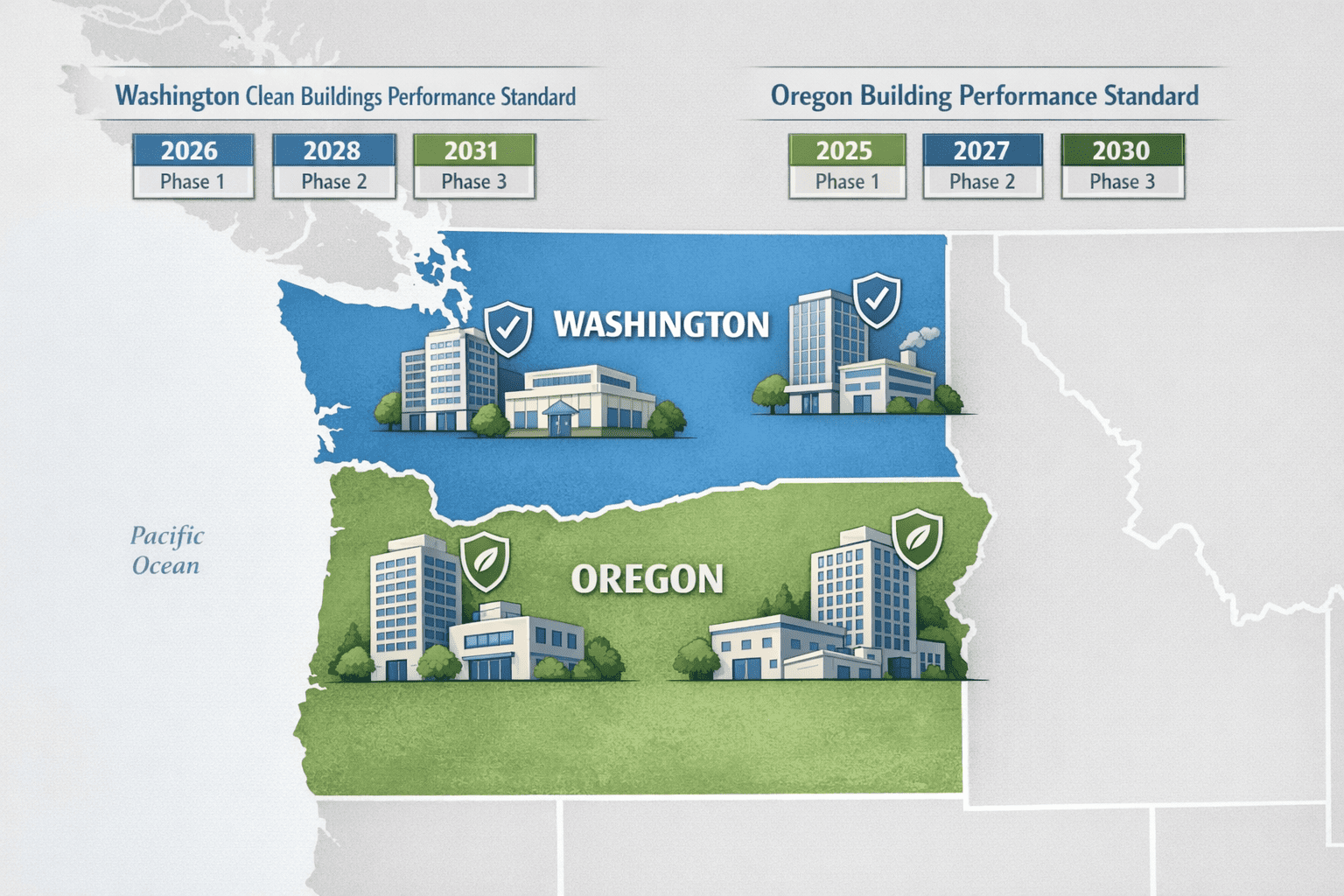
Washington’s Clean Buildings Performance Standard Sets The Framework
Washington’s Clean Buildings Performance Standard (CBPS) is one of the most structured BPS laws in the country.
The law applies to most nonresidential buildings larger than 20,000 square feet and rolls out in tiers based on building size. Owners must benchmark energy use, develop operational plans, and meet performance targets tied to EUI metrics.
What makes Washington unique is its strong incentive structure. Early compliance is encouraged through state-funded programs that can offset a large portion of compliance costs for qualifying buildings.
Oregon’s Building Performance Standard Follows A Similar Path With Different Timing
Oregon’s Building Performance Standard mirrors Washington’s goals but operates on its own timeline.
The Oregon BPS applies to large commercial buildings and introduces compliance phases that start with planning, benchmarking, and energy management documentation before moving toward performance targets. The Oregon BPS timeline emphasizes early action, especially for owners seeking incentive funding or compliance flexibility.
Because Oregon’s program is newer, many property owners underestimate how quickly requirements escalate once initial deadlines pass. Waiting often reduces access to incentives and increases enforcement risk.
The First Step For BPS Compliance Is Visibility Across Your Building
Before a building can improve performance, owners must understand how it currently operates.
Both Washington and Oregon require accurate benchmarking as the foundation for BPS compliance. Benchmarking establishes a baseline using tools like ENERGY STAR Portfolio Manager, allowing states to measure improvement over time.
If benchmarking data is incomplete or inaccurate, every downstream requirement becomes harder to meet. This is why many compliance issues start not with performance failures, but with data quality problems.
Operational Plans Are Mandatory, Not Optional
BPS compliance is not limited to energy scores; it also requires documented operational intent.
Washington and Oregon both require buildings to create plans that explain how energy performance will be managed. These plans demonstrate that owners are actively monitoring systems, maintaining equipment, and adjusting operations to reduce waste.
While names differ by state, these documents typically include operational strategies, maintenance practices, and accountability structures. Buildings without approved plans may be considered non-compliant even if their energy use appears reasonable.
BPS Compliance Is A Multi-Year Timeline, Not A Single Deadline
One of the most common mistakes owners make is treating BPS like a one-year project.
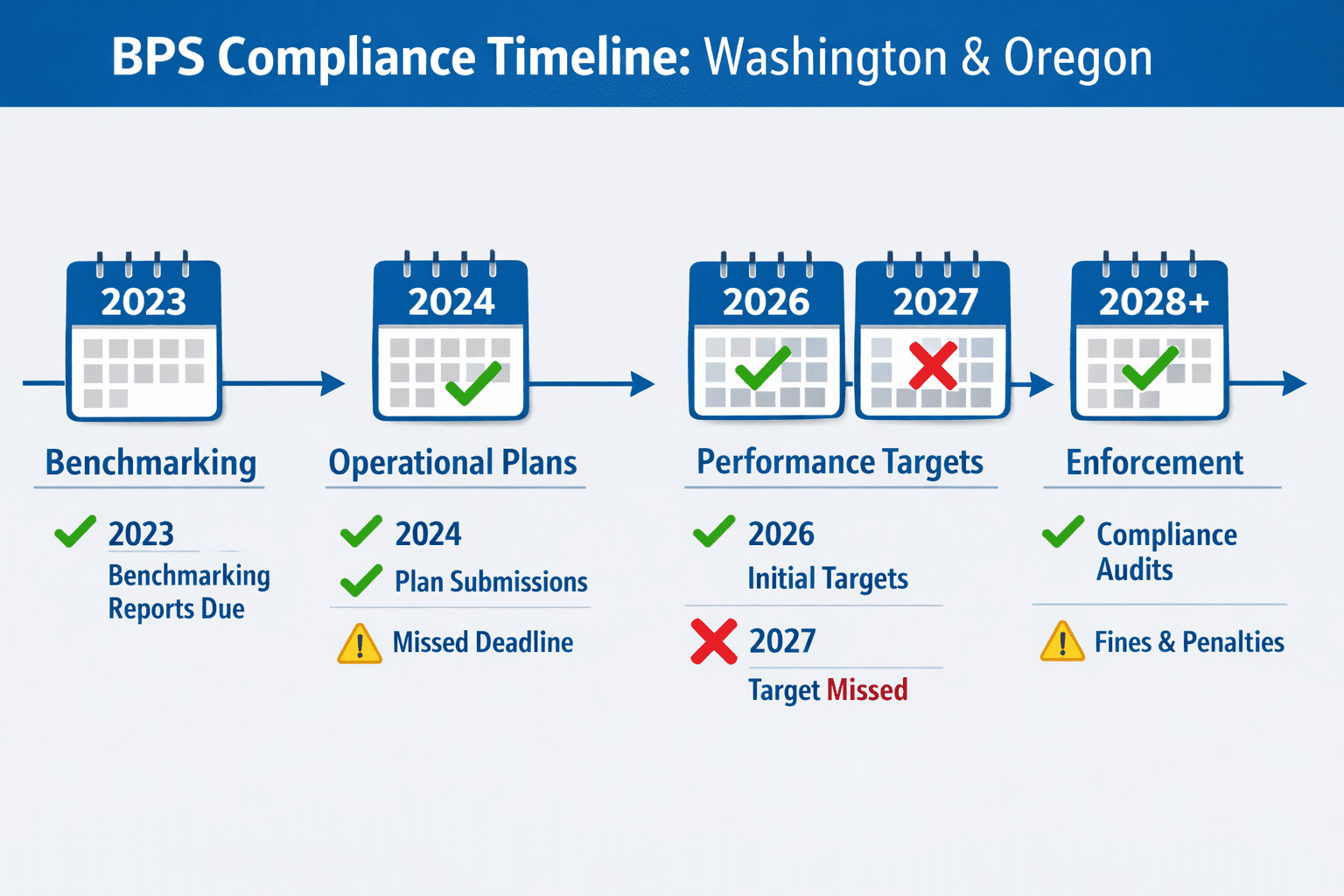
In reality, compliance unfolds across multiple years. Early deadlines usually involve benchmarking and planning, while later deadlines focus on performance outcomes. Missing early milestones often compounds risk later, because it limits flexibility and increases remediation costs.
Understanding where your building sits on the timeline is essential for budgeting, staffing, and capital planning.
Core BPS Compliance Steps For Washington And Oregon Buildings
While details vary, the foundational compliance steps are consistent across both states.
BPS compliance steps typically include:
- Confirming building eligibility and tier classification
- Completing and verifying annual energy benchmarking
- Establishing required operational and management plans
- Monitoring performance metrics against state targets
- Preparing documentation for audits or verification reviews
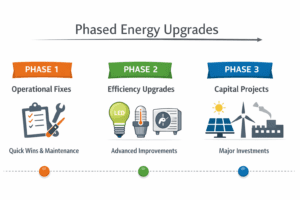
Completing these steps early allows owners to spread costs over time and avoid last-minute corrective actions.
Incentives Reward Early Action, Not Last-Minute Compliance
Both Washington and Oregon offer incentive programs designed to encourage early compliance.
These programs often cover benchmarking costs, planning documents, audits, and in some cases, implementation support. However, incentives are typically limited, competitive, and time-bound. Once funds are exhausted or deadlines pass, owners are responsible for full compliance costs.
Buildings that delay often lose access to incentives and face higher out-of-pocket expenses when enforcement begins.
Penalties Increase When Compliance Is Reactive
BPS penalties are designed to discourage inaction.
Fines may be assessed per square foot, per day, or based on performance gaps. Beyond financial penalties, non-compliant buildings may face public disclosure, reputational risk, or reduced asset value during refinancing or sale.
Reactive compliance also leads to rushed audits, higher contractor costs, and fewer options for performance improvements.
A 360 Compliance Approach Reduces Risk Across Portfolios
Managing BPS compliance across multiple buildings requires more than spreadsheets and reminders.
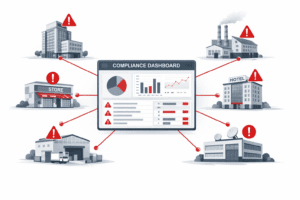
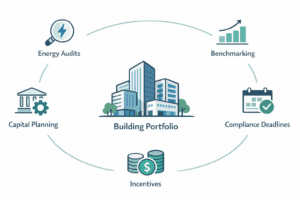
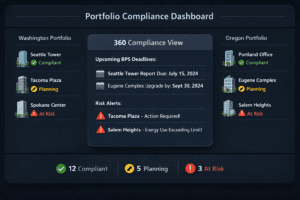
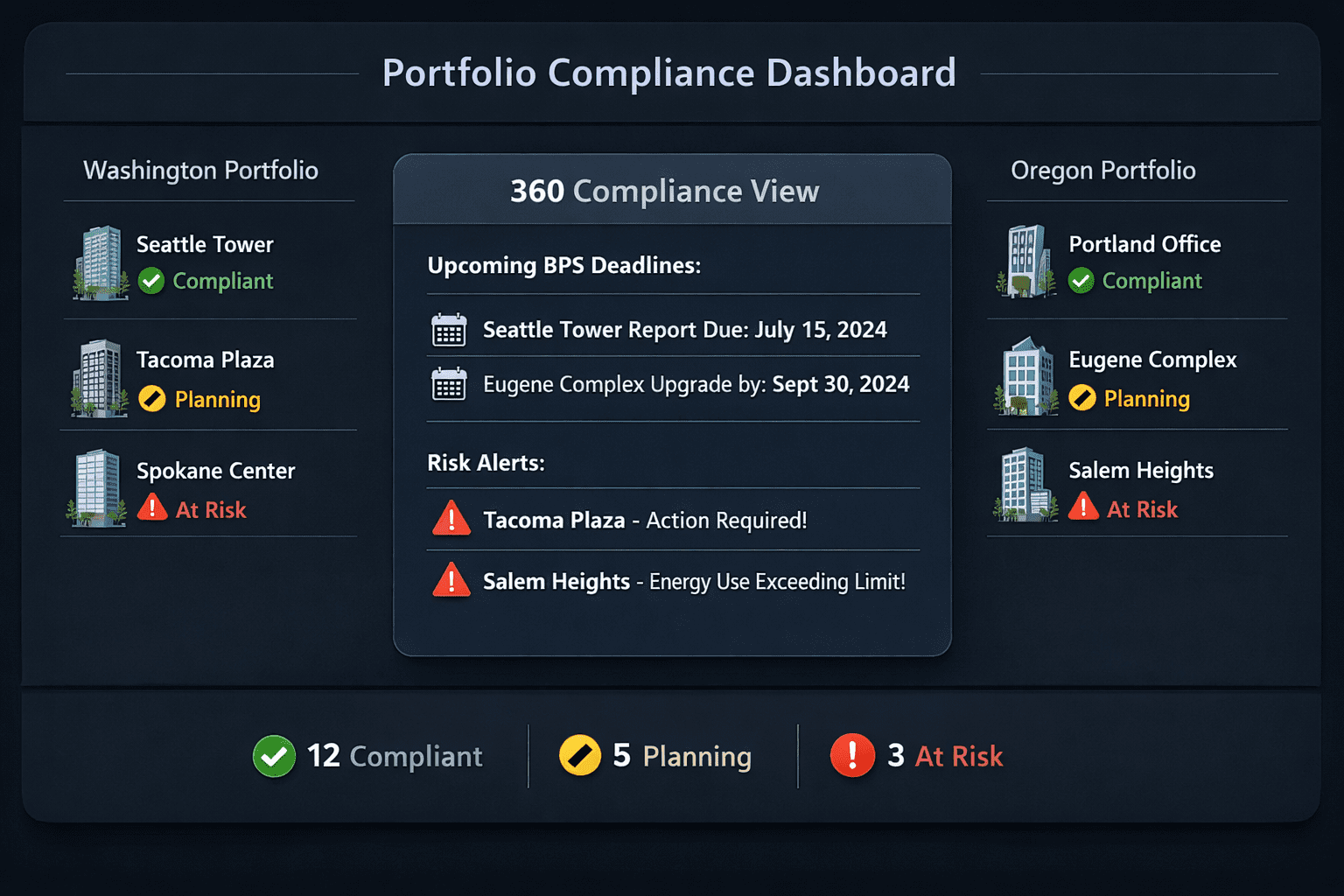
A 360 compliance approach centralizes benchmarking, audits, operational plans, and deadlines into a single system. This reduces missed requirements and allows owners to see portfolio-wide risk before it becomes costly.
For owners with properties in both Washington and Oregon, this approach ensures consistent compliance while accounting for state-specific differences.
A Risk Assessment Clarifies Your Next Move
Before committing to upgrades or audits, owners should understand their exposure.
A BPS risk assessment evaluates where each building stands today, what requirements apply next, and which actions deliver the highest compliance value. This prevents over-spending while ensuring no requirement is overlooked.
Most owners discover that a small number of early actions dramatically reduce long-term risk.
Start BPS Compliance With Confidence, Not Guesswork
Building performance standards are not going away, and enforcement will only increase.
Washington and Oregon have made it clear that energy performance is now part of long-term building regulation. Owners who gain visibility early, document operations, and plan strategically will avoid penalties and protect asset value.
If you are unsure where your building falls under the Washington Clean Buildings Performance Standard or Oregon Building Performance Standard, the best next step is clarity.
Start with a portfolio risk assessment or a 360 compliance review to map your BPS obligations, timelines, and opportunities before deadlines force rushed decisions.