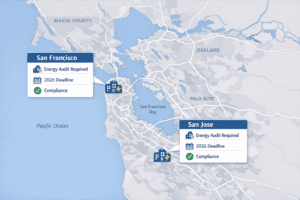

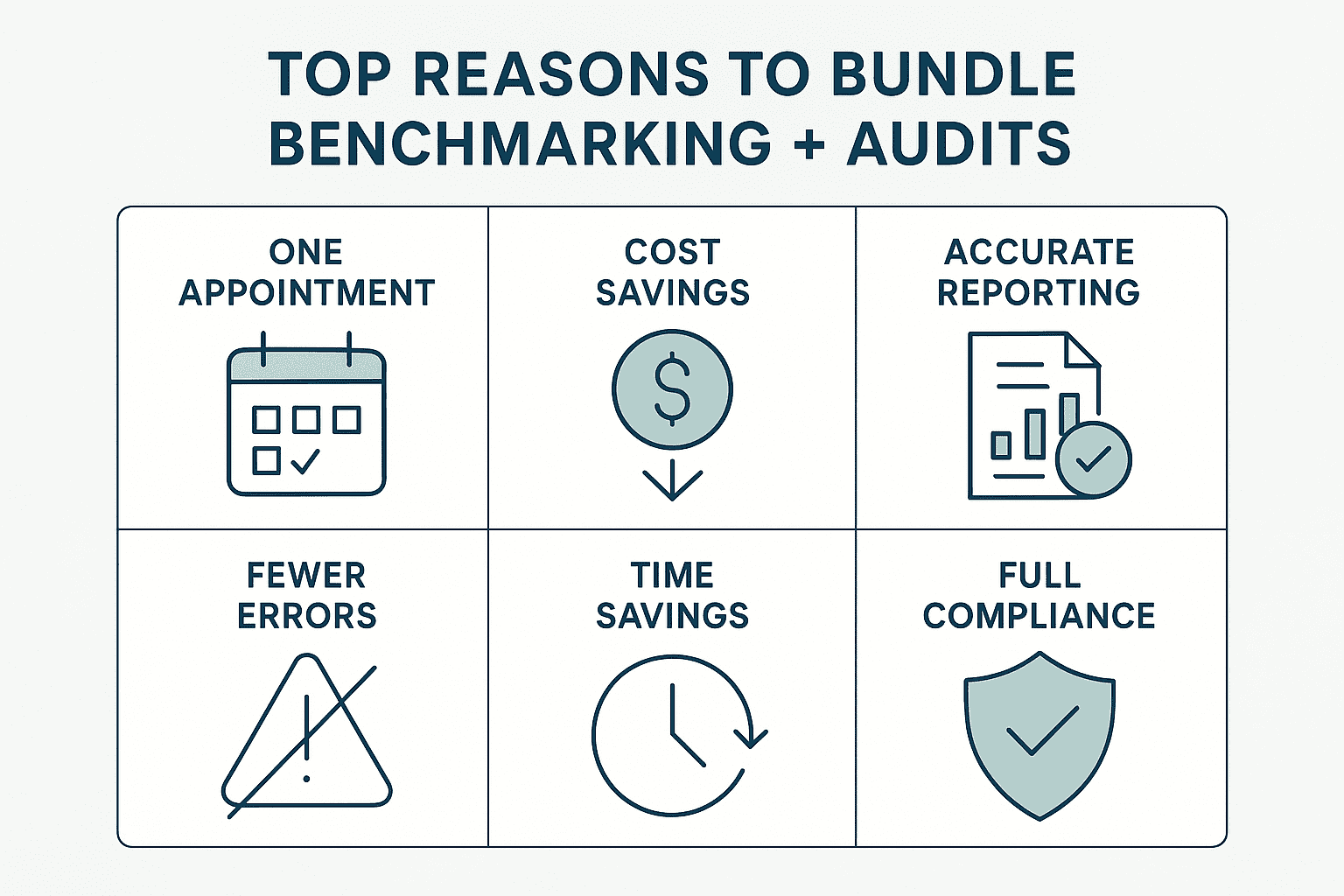
With new energy rules and tighter deadlines coming in 2026, building owners and managers are asking the same question: How can I stay compliant without wasting time and money?
The answer is simple: bundle your energy benchmarking and audit into one smart package.
A combined energy audit and benchmark service checks off two key requirements with one appointment, and helps avoid missed deadlines, double fees, and compliance headaches.
Why Combine Benchmarking And Audits?
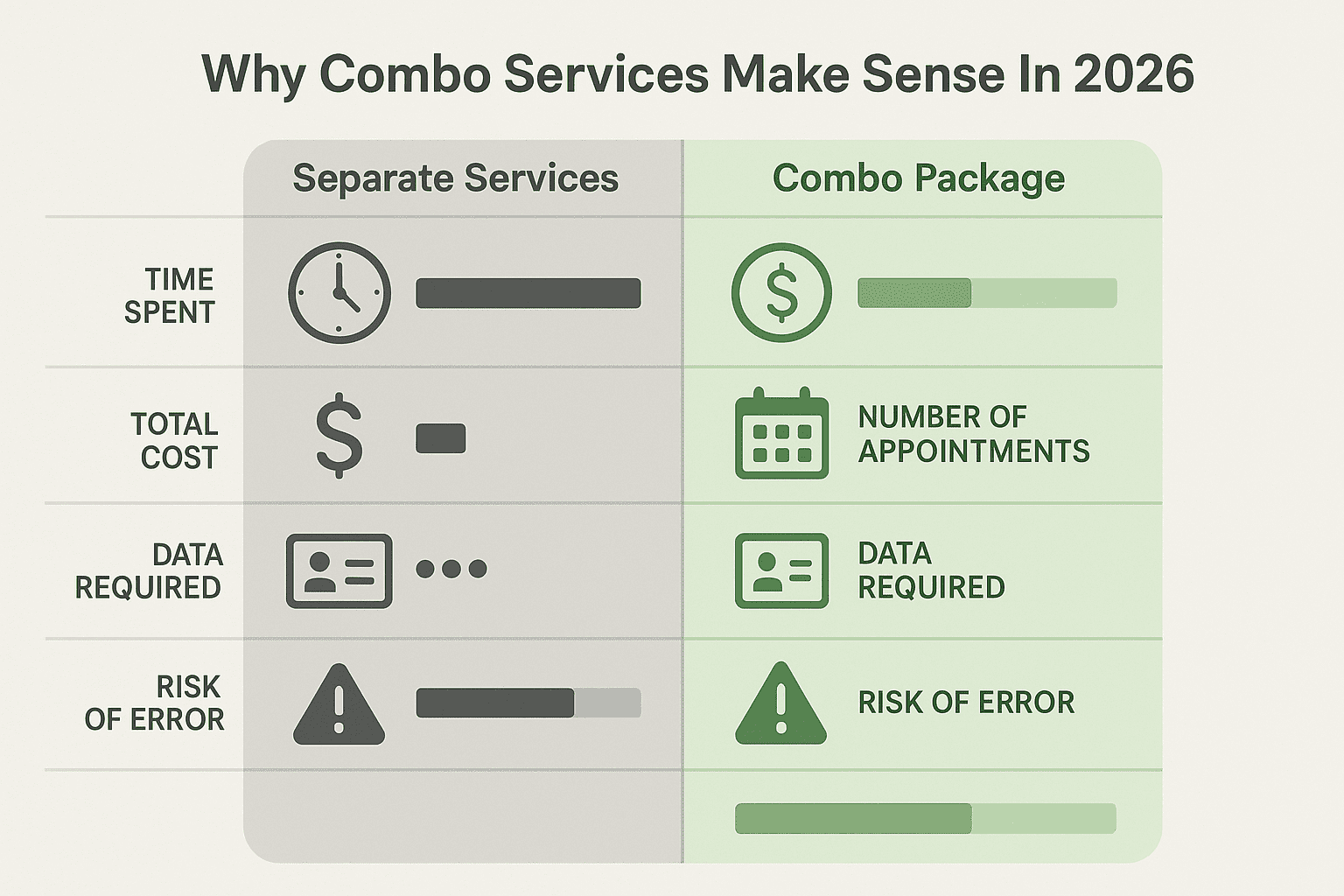
Each year, more cities and states require large buildings to complete energy benchmarking and, in many cases, energy audits. These are usually separate filings with different rules, due dates, and providers.
But in reality, these services overlap in big ways.
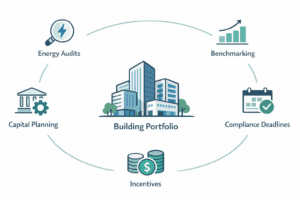
Benchmarking shows how your building uses energy. Audits go deeper to explain why that usage is high or low, and how to improve it. When done together, they give you a complete energy reporting strategy for 2026, with less work on your end.
Instead of hiring two separate teams and juggling two different timelines, a benchmark-audit combo saves time, cuts cost, and simplifies your reporting process.
What’s Changing In 2026?
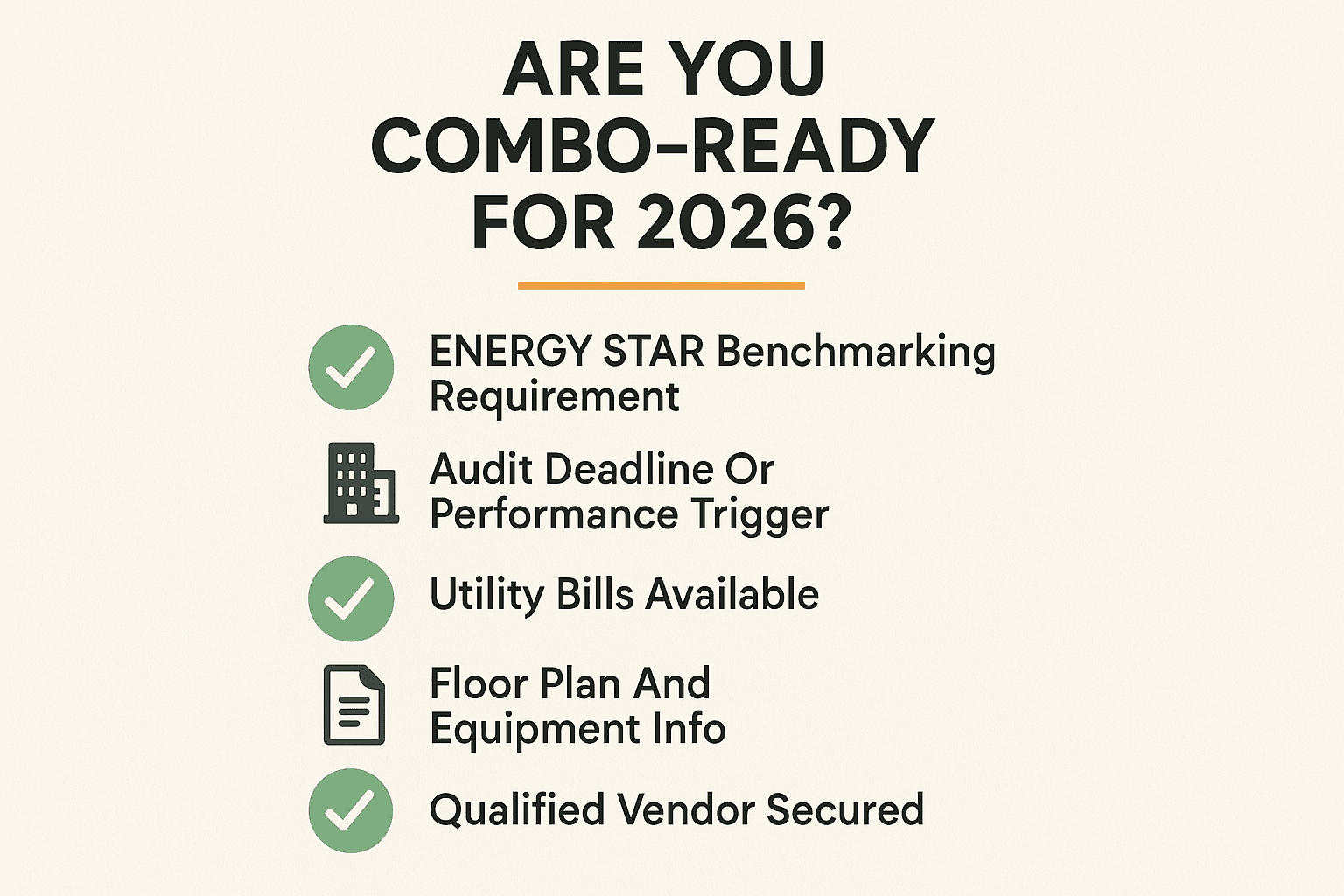
Energy laws are getting stricter, especially in cities with clean energy goals. Many places now require buildings over a certain size to submit:
- Annual benchmarking reports
- Periodic energy audits (every 5–10 years, depending on location)
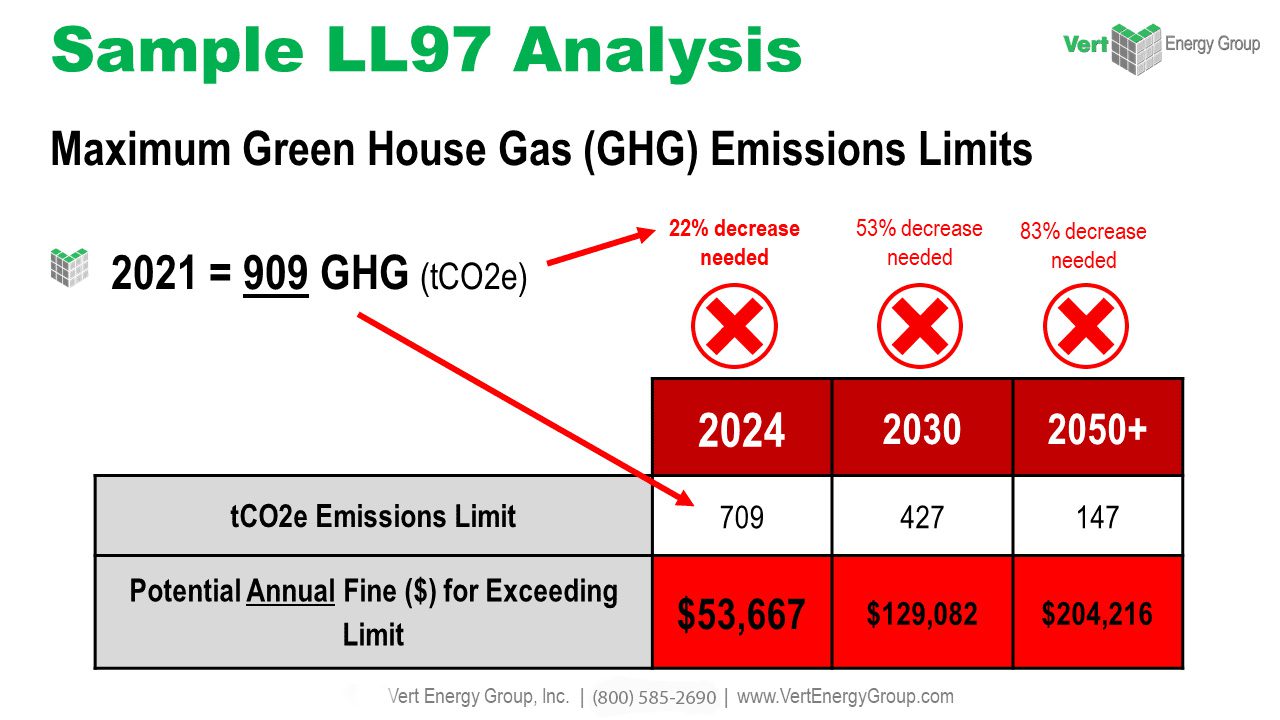
- Corrective action plans if performance scores are too low
In some regions, audits are triggered when your ENERGY STAR score falls below a certain number. That means even if you’re used to just doing benchmarking, your building could now need a full audit too.
This is where combining both services into a 2026 compliance bundle makes a lot of sense.
The Benefits Of A Benchmark + Audit Combo
Combining your audit and benchmarking isn’t just about saving time (though it does that, too). It gives you a better overall view of your building’s energy performance and makes sure your compliance tasks don’t fall through the cracks.
Here’s what you gain:
- Fewer appointments – Your provider gathers data for both services at the same time.
- Faster turnaround – Audit and benchmark reports can be completed in one project cycle.
- Lower cost – Bundled services are usually priced lower than two separate bookings.
- Stronger reporting – Data from one process supports the other, improving accuracy.
- Simplified filing – Your provider can handle both submissions under one umbrella.
- Better planning – Combined reports make it easier to map future energy upgrades.
Who Should Consider A Combo Package?
If your building is 25,000 square feet or more, there’s a good chance you’re subject to at least one benchmarking rule. If your city or state has an audit cycle, or you’ve received a compliance notice, you’ll need both services in 2026.
Combo services are ideal for:
- Office buildings
- Multifamily properties
- Schools and universities
- Warehouses and logistics facilities
- Retail and mixed-use properties
Even if your audit isn’t technically due until 2027, bundling it with your 2026 benchmarking helps you stay ahead and avoid any last-minute surprises.
What’s Included In A Combo Compliance Package?
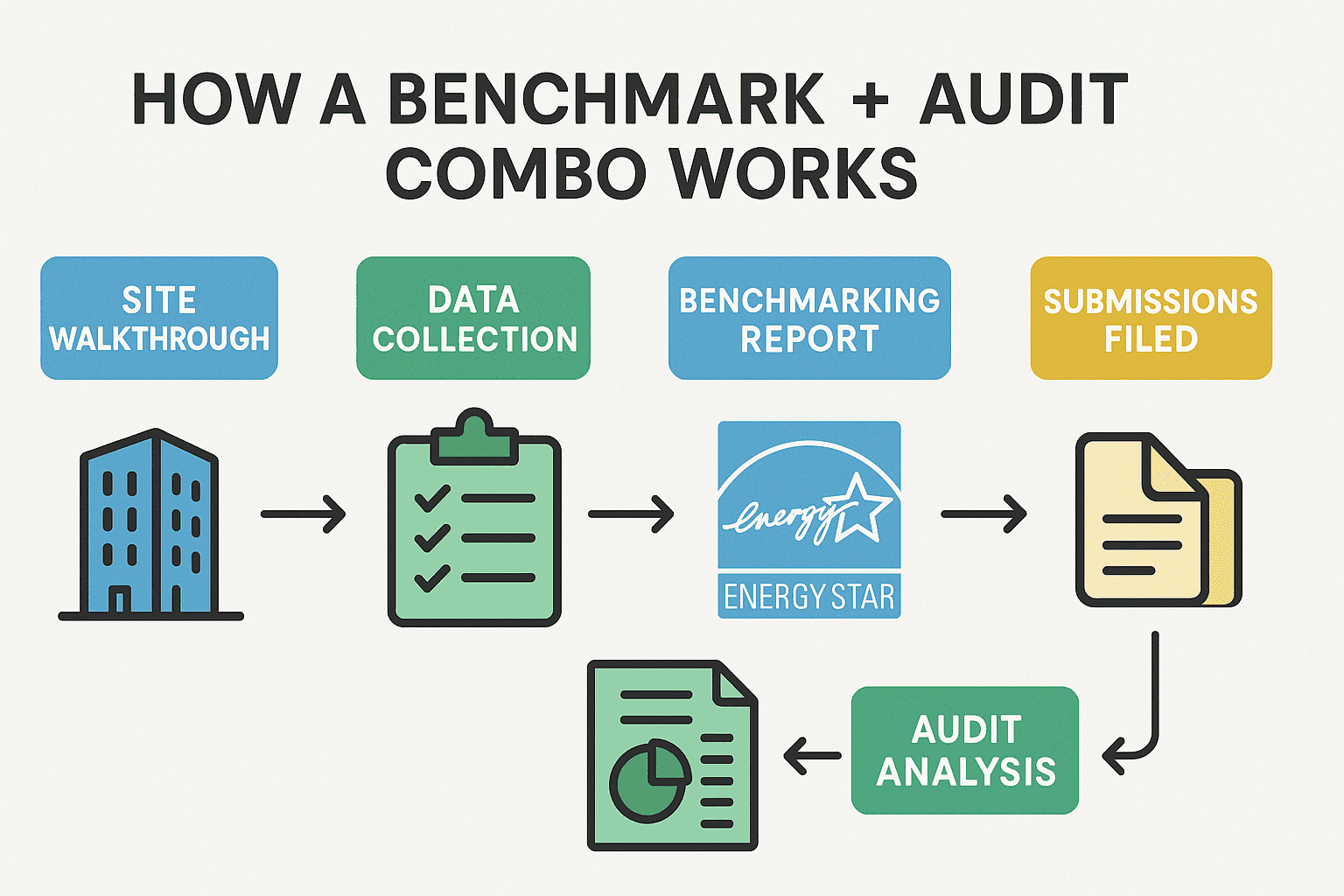
A typical benchmark + audit combo covers everything you need to stay compliant. You’ll get data collection, site walkthroughs, utility analysis, performance scoring, and detailed reports that meet both local and state energy requirements.
Many providers also include submission to ENERGY STAR Portfolio Manager, local portals, and follow-up support in case anything needs to be corrected or clarified.
If your provider also offers compliance tracking, they can keep an eye on future deadlines and flag new rules that apply to your properties.
Real Cost And Time Savings
Let’s say you book a benchmarking service in March and an audit in July. You’ll likely pay two separate fees, go through two walkthroughs, and provide the same data twice.

Now imagine doing both in one visit, with a bundled rate and unified timeline. You save hours of coordination and hundreds, sometimes thousands, of dollars in fees and overhead.
More importantly, you stay ahead of the curve, not scrambling to get everything in before the final quarter.
What Happens If You Wait?
Delaying either your audit or your benchmarking can lead to missed filings, fines, or emergency service bookings. Many cities now charge late penalties that grow monthly. Others list non-compliant buildings online, which can affect your brand or delay sales, loans, or permits.
In 2026, service providers will book up fast, especially in Q3 and Q4. Getting both tasks done early and together gives you breathing room and full compliance coverage.
Final Thought: Don’t Double Your Work In 2026
If your property is subject to benchmarking and audit requirements, bundling them into one appointment is the smartest move you can make this year.
It’s the easiest way to meet deadlines, save money, and build a better energy strategy, all with less hassle. One appointment, two requirements, bundle your 2026 services.