
Benchmarking Laws: Their Crucial Role In Regulating Market Volatility
In today’s highly volatile energy landscape, one of the most effective tools regulators and energy leaders rely on to ensure stability is the implementation of benchmarking laws. These laws, mandating the tracking, reporting, and comparison of energy performance, play a pivotal role in reducing risk, encouraging sustainability, and maintaining investor and public confidence in the energy sector.
From geopolitical disruptions to supply chain instability and evolving climate policies, energy markets are increasingly reactive to external forces. Benchmarking laws help mitigate these fluctuations by enforcing transparency, consistency, and long-term planning. This article unpacks how benchmarking laws act as market stabilizers, promote sustainable practices, and support smart energy management strategies across the globe.
What Are Benchmarking Laws?
Benchmarking laws require building owners, utility companies, and energy stakeholders to measure their energy and water consumption and compare it to standardized performance metrics. These laws apply primarily to commercial real estate, industrial facilities, and the broader energy infrastructure.
Rather than merely encouraging best practices, benchmarking laws compel organizations to disclose performance, identify inefficiencies, and take measurable steps to improve. The result is a clear, data-backed view of how energy is being used, and how it can be used better.
Stabilizing The Energy Market Through Benchmarking
Market volatility in the energy sector creates cascading effects, spiking utility costs, disrupting operations, and shaking investor confidence. Benchmarking laws act as a buffer to this volatility by creating a structure for transparency and long-term strategy.
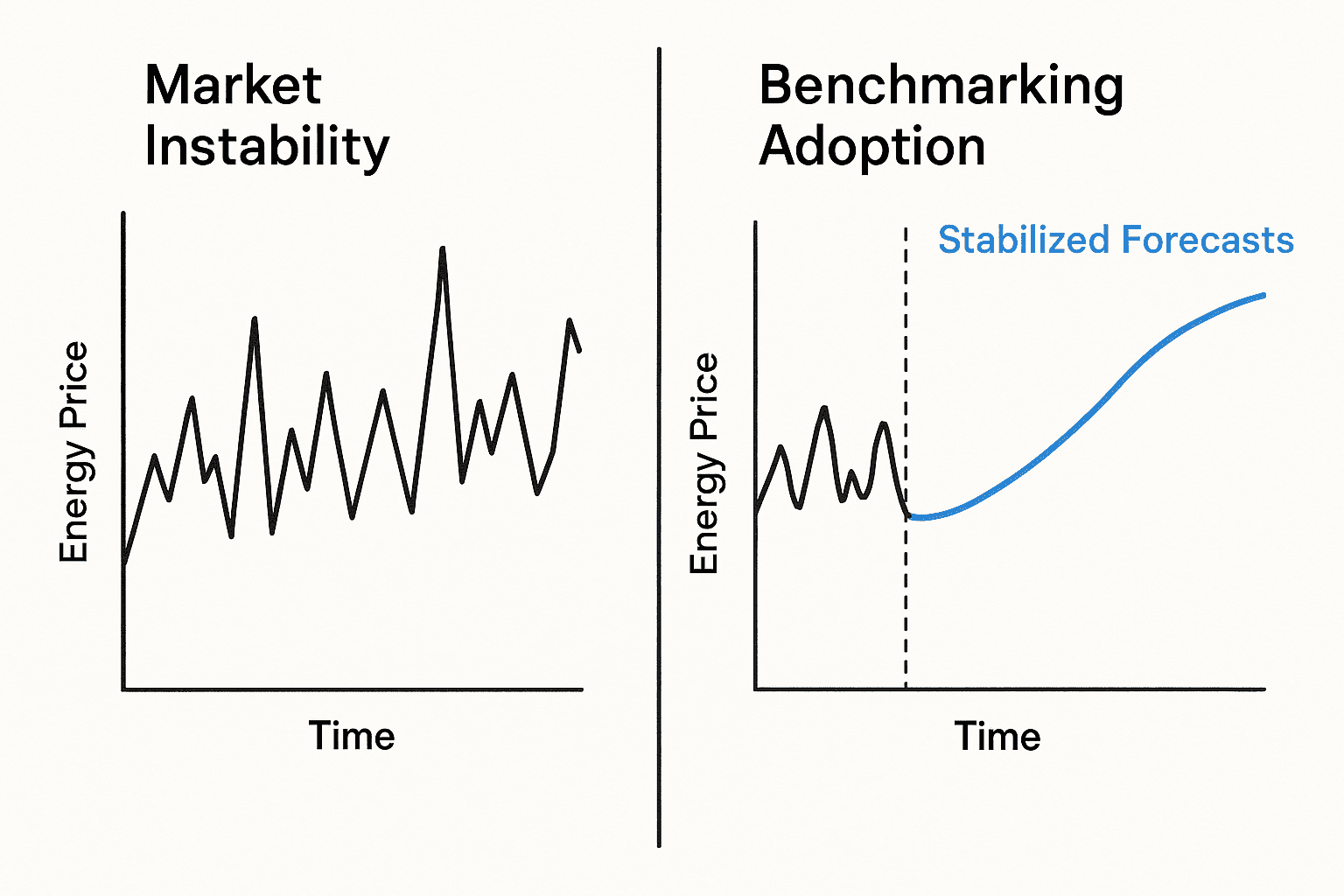
By requiring regular reporting and comparison of energy performance, these laws reduce uncertainty in several key ways:
- Price Predictability: Benchmarking helps track patterns in energy use, which in turn allows providers and users to forecast costs and reduce unexpected price swings.
- Investment Confidence: Investors and financiers are more likely to support projects with clear, standardized data on energy efficiency and compliance.
- Policy Guidance: Governments use benchmarking data to inform energy policy, target subsidies, and adjust regulations based on actual performance.
A great example of this is the European Union’s Energy Efficiency Directive, which includes aggressive benchmarking requirements that have helped member states stabilize energy markets while accelerating climate targets.
Why Compliance With Benchmarking Laws Matters
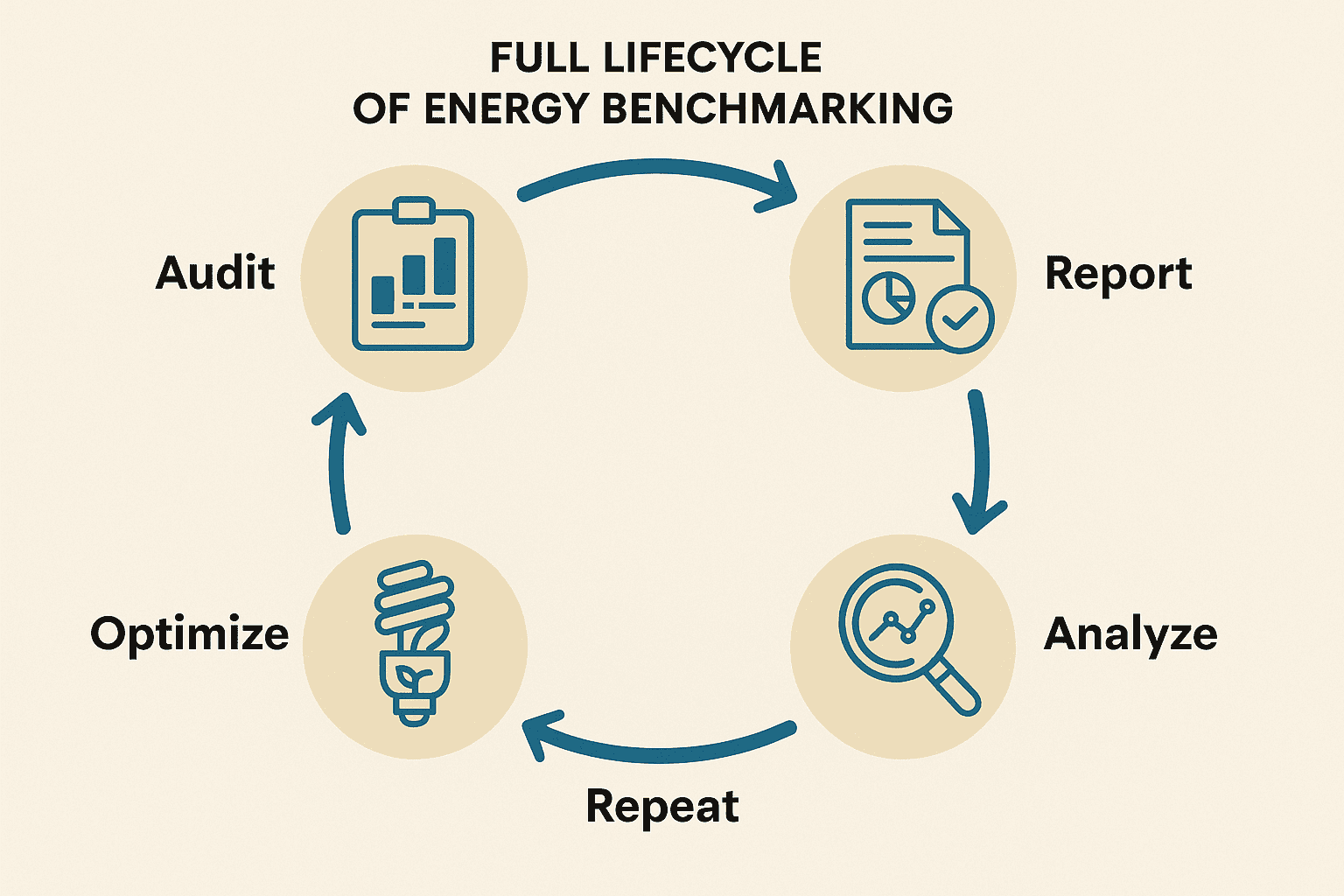
Compliance isn’t just about avoiding fines, it’s a path toward operational resilience, market leadership, and better performance. Companies that follow benchmarking regulations benefit from:
- Operational Efficiency: Ongoing audits and performance comparisons force organizations to identify energy waste and act on it.
- Competitive Edge: Demonstrating compliance with sustainability laws appeals to stakeholders, clients, and environmentally conscious investors.
- Risk Mitigation: Staying compliant helps organizations anticipate changes in legislation, avoiding disruptions and reputational damage.
Take, for instance, a mid-sized commercial energy provider that adopts benchmarking early. Not only do they remain compliant, but they also discover 12% savings in electricity use across their portfolio, reducing operating expenses and boosting ESG scores at the same time.
Driving Sustainability Through Benchmarking
At its core, benchmarking legislation exists to accelerate the transition to a low-carbon economy. By making energy performance public and accountable, these laws force property owners and energy providers to consider sustainability in every decision.
Benchmarking promotes sustainable practices by pushing organizations to:
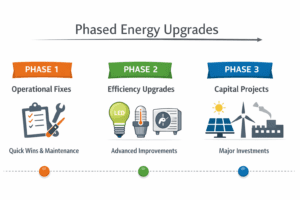
- Replace outdated systems with energy-efficient technologies
- Adopt renewable energy sources like solar, wind, or geothermal
- Monitor and reduce carbon emissions through strategic investments
- Shift from reactive maintenance to predictive energy management
Nations like Germany and Denmark have shown that stringent benchmarking, combined with smart incentives, can drive rapid gains in sustainability. These countries consistently rank among the most energy-efficient in the world, thanks in large part to transparent and enforced performance tracking.
Tools & Technology Enabling Effective Benchmarking
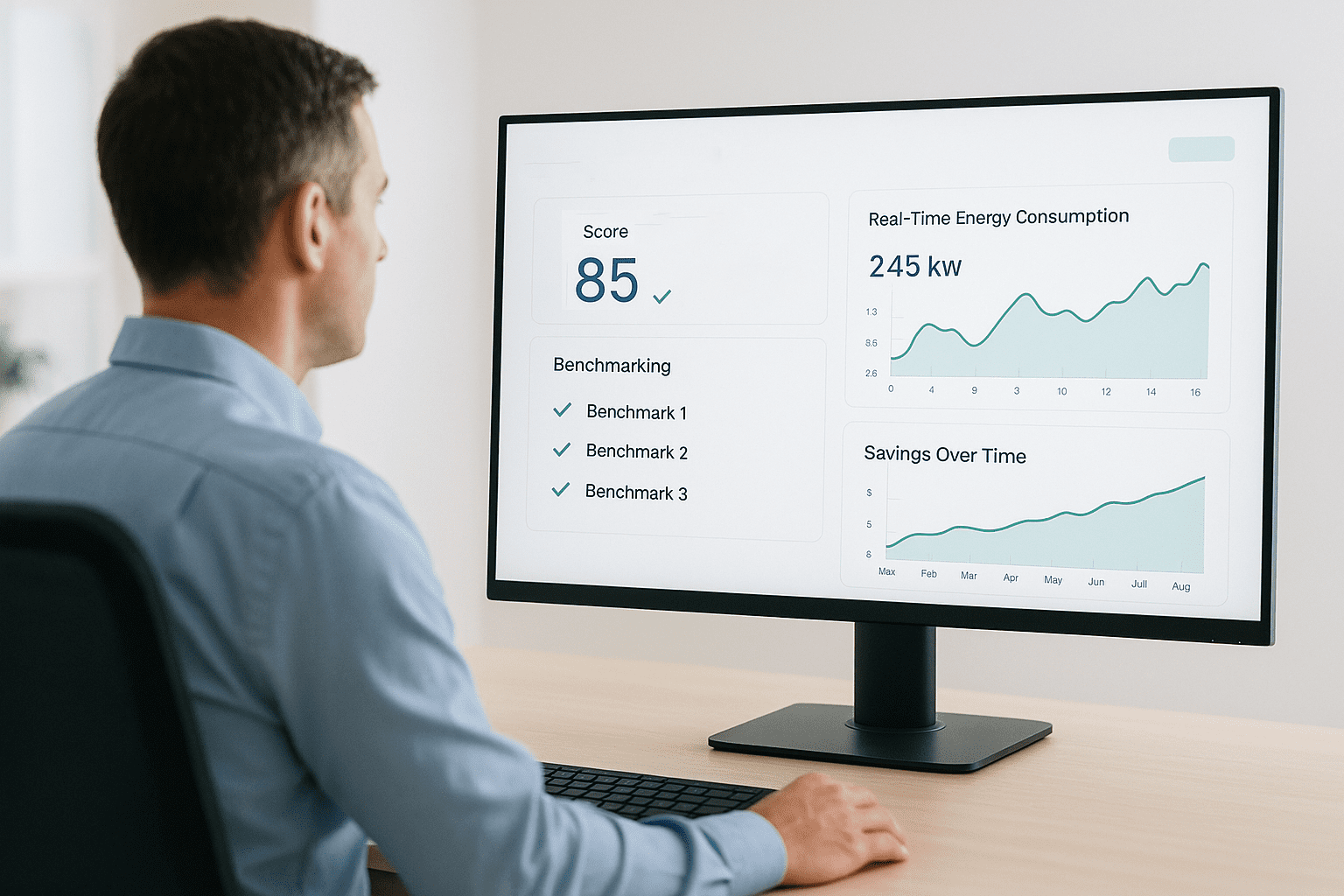
In 2025, successful energy benchmarking is increasingly powered by advanced technology platforms. From IoT-enabled sensors to AI-powered analytics, modern tools are making data collection, reporting, and optimization easier than ever.
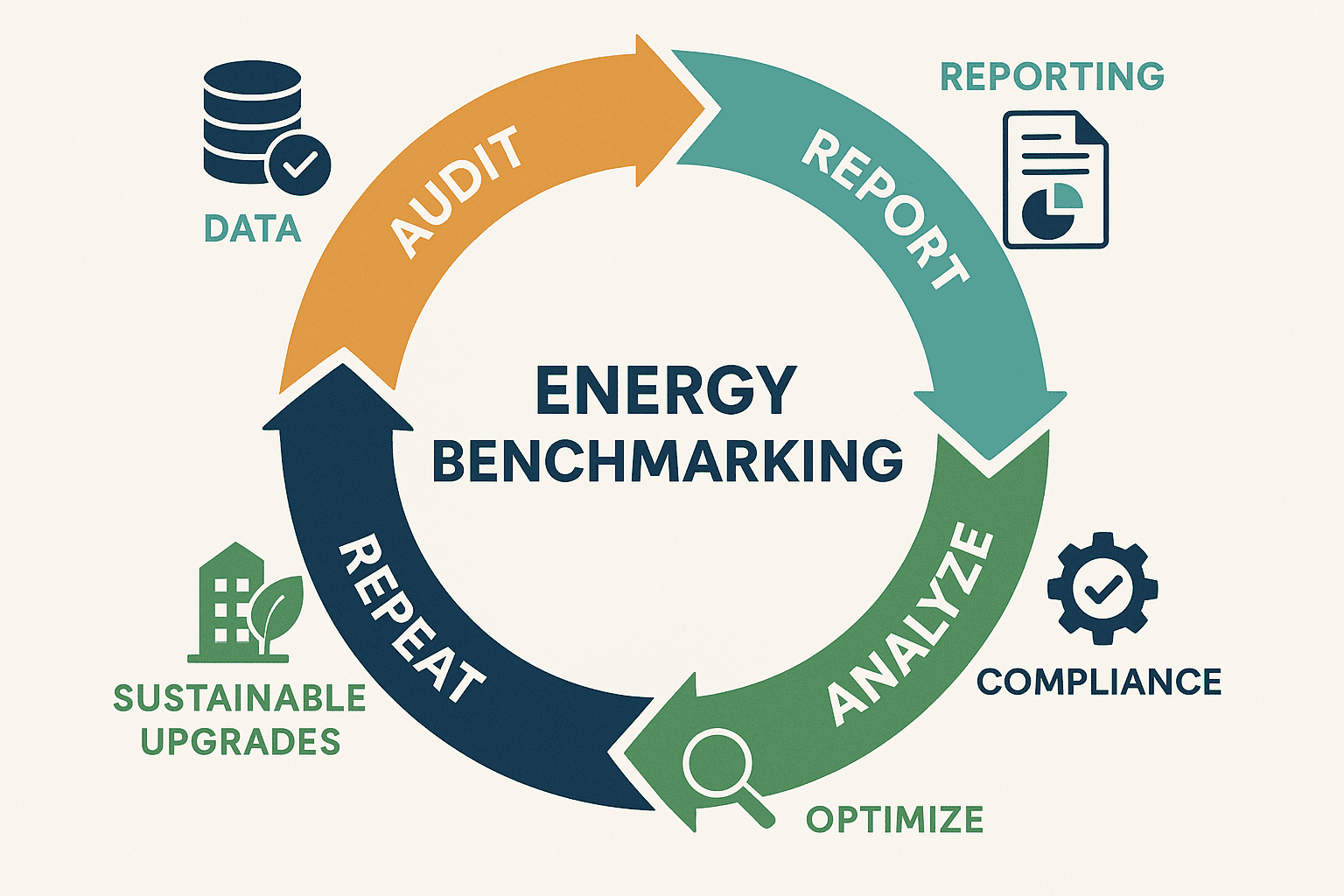
Many organizations now rely on digital platforms to:
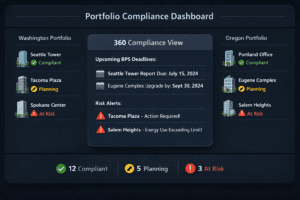
- Track real-time energy usage across multiple facilities
- Compare performance against ENERGY STAR or BOMA standards
- Identify peak usage periods and waste patterns
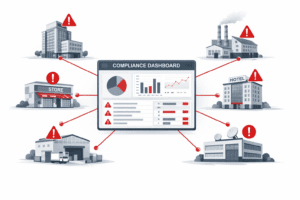
- Generate automatic reports for compliance
Smart technologies like IoT meters, machine learning models, and predictive analytics dashboards empower energy teams to go beyond compliance and unlock substantial savings.
Common Challenges And What The Future Holds
Despite their benefits, benchmarking laws can pose challenges, particularly around data standardization and privacy concerns. Many organizations struggle to gather consistent data across large portfolios, especially when properties use different systems or vendors.
Additionally, evolving energy landscapes, such as the rise of electric vehicle infrastructure or distributed solar, are stretching the limits of today’s benchmarking frameworks. This means benchmarking laws must evolve too, accounting for:
- New sources of energy and emissions
- More granular, real-time data
- Lifecycle carbon accounting
- Resilience planning for climate events
Looking ahead, benchmarking laws are expected to become more dynamic and data-driven, rewarding not just compliance but innovation. Forward-thinking organizations that adopt smart benchmarking strategies now will be better positioned to adapt, compete, and lead in the low-carbon economy.
Final Thoughts: Benchmarking Is The Backbone of Smarter Energy Management
These laws create a framework for accountability, guide energy markets toward long-term stability, and drive innovation in sustainability and performance.

For energy providers, building owners, and property managers, the message is clear: start benchmarking now, or risk falling behind.
Here’s What You Can Do Today
Use these two steps to start maximizing your benchmarking strategy:
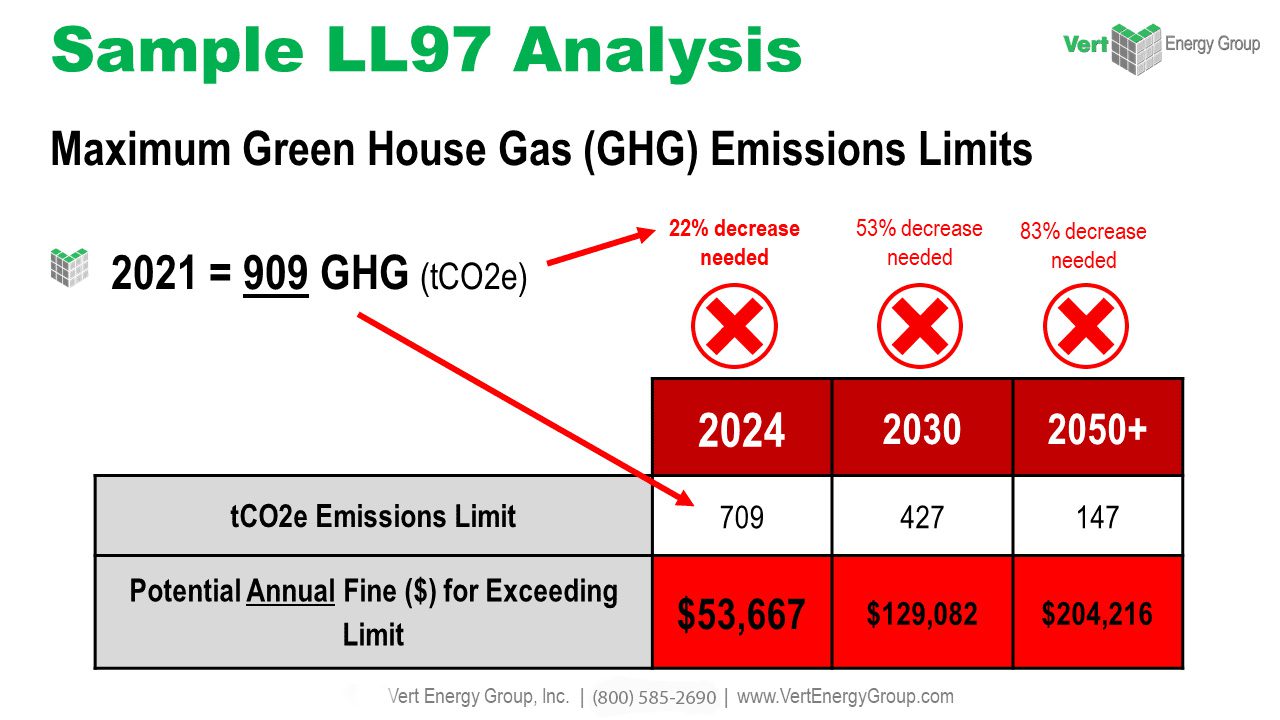
- Check your local benchmarking requirements: Confirm whether your properties fall under a benchmarking ordinance (like LA’s EBEWE, New York’s LL84, or DC’s BEPS). If so, identify your next reporting deadline.
- Use a benchmarking tool like VertPro®: Platforms like VertPro.com streamline compliance by automating data collection, organizing reporting, and providing instant quotes for audits or RCx services. You’ll spend less time chasing paperwork—and more time optimizing performance.
VertPro®: Your Partner In Smart Benchmarking
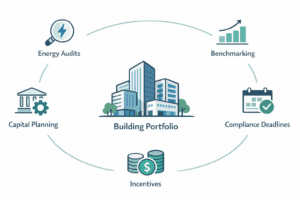
VertPro.com helps building owners and energy managers navigate the complex world of benchmarking laws with ease. From audit pricing to documentation management and automated compliance tracking, their platform is designed for simplicity and results.
Their technology supports compliance with over 60 energy benchmarking and efficiency laws nationwide, making it easier than ever to meet your legal obligations while boosting energy performance.
📊 Book a demo, get instant pricing, or explore energy-saving upgrade options at VertPro.com