

Stricter Rules. Surprise Inspections. Higher Fines. Here’s How To Stay Ahead.
If you own or manage a commercial building in Chicago, Q2 2025 is a make-or-break moment for compliance. The city has tightened its inspection protocols and adopted a zero-tolerance stance for repeat violations, especially those tied to building safety, documentation, and ongoing maintenance.
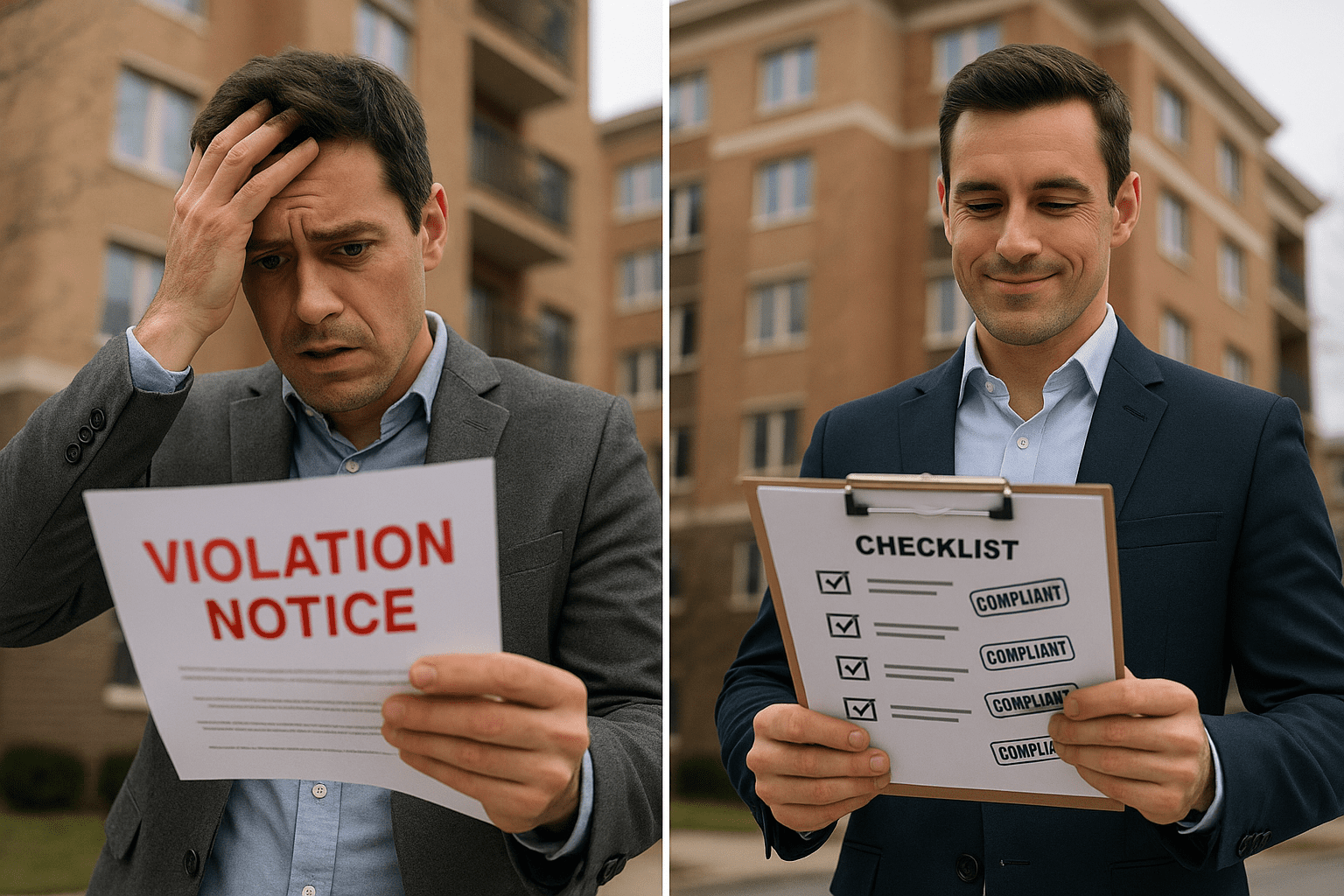
Fines now reach up to $1,000 per violation, and enforcement activity is ramping up just as summer approaches. What used to be simple reminders or warnings are now fast-tracked into penalties—and if you’re not proactive this quarter, small issues could snowball into expensive problems.
This guide breaks down everything you need to know and do in Q2 2025 to meet Chicago’s updated building compliance rules and avoid surprise inspections, fines, or operational disruptions.
What’s New For Q2 2025?
Chicago’s Department of Buildings has rolled out several key updates aimed at increasing accountability across the city’s commercial property sector. These changes reflect growing public demand for safer, well-maintained buildings, and stricter enforcement when standards aren’t met.
🔍 More Frequent On-Site Inspections
In Q2, city inspectors are ramping up site visits, especially for buildings that:
- Have had violations in the past 24 months
- Are located in busy commercial zones or dense occupancy areas
- Have changed ownership or management recently
Some properties may see multiple inspections within one quarter, especially if issues are flagged early.
🧾 Real-Time Document Auditing
Chicago’s building inspectors now use digital systems that let them instantly cross-check your records with city filings. If you’re missing elevator certifications, outdated façade reports, or incomplete logs, they’ll catch it..
Even if your building is physically up to standard, incomplete documentation can still trigger fines or re-inspections.
Top Compliance Priorities For Chicago Buildings This Quarter
To stay on the right side of the city’s updated policies, building owners and managers must focus on three critical compliance areas in Q2. These categories are the most frequently cited—and most easily overlooked.
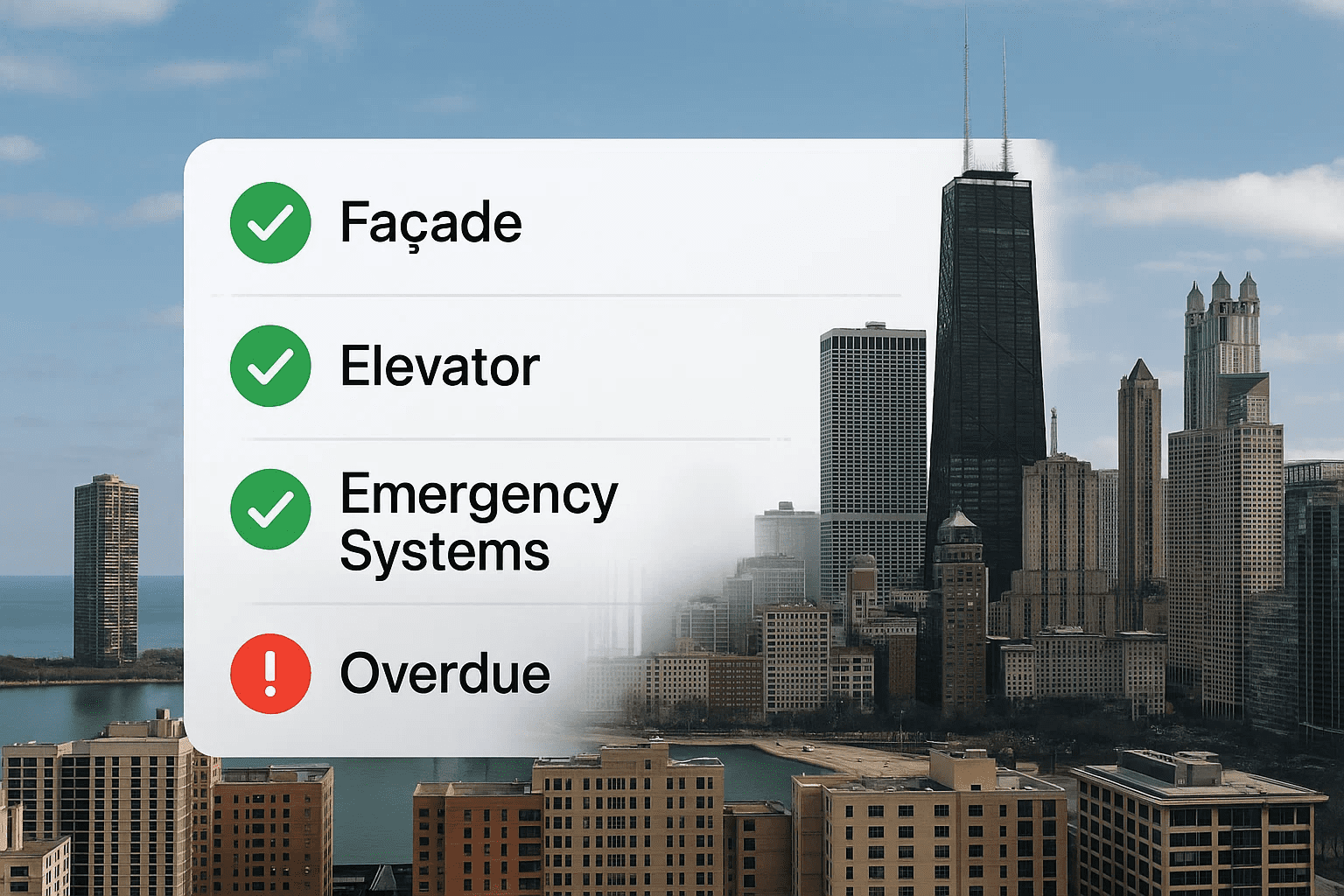
1. Façade Inspection And Reporting
All buildings over six stories are required to submit regular façade inspection reports. These evaluations help prevent structural issues, such as falling debris or unstable masonry.
What to do now:
- Confirm that your most recent façade report has been completed by a licensed engineer.
- Check that all required repairs or maintenance from past inspections have been addressed.
- Store physical and digital records in an easily accessible location in case of spot checks.
Even if your building underwent repairs, missing documentation will still count as a violation.
2. Elevator Certification
Every operational elevator must display a valid, current certificate, clearly posted in the cab. Certificates that are expired, missing, or in the wrong location are now primary targets during inspections.
Immediate action items:
- Verify that your elevator vendor is on schedule for annual inspections.
- Ensure updated certificates are posted in all elevator cabs.
- Save a digital backup in case a paper copy is lost or damaged.
If your elevator contractor hasn’t provided timely reports, now’s the time to reassess your vendor relationship.
3. Emergency Systems And Life Safety Signage
From illuminated exit signs to fire extinguishers and emergency lighting, the city expects every building to have fully functional, up-to-date safety equipment.
Inspections now include detailed reviews of:
- Emergency lighting that works during power failures
- Properly tagged fire extinguishers with recent service dates
- Clearly visible, unobstructed exit signage
- Documented testing of fire alarms and safety systems within the past 6 months
Even small issues, like an exit sign hidden behind a plant, can result in citations under the new enforcement model.
The Hidden Cost Of Repeat Violations
Chicago now treats repeat violations with heightened penalties and legal escalation. Here’s what qualifies as a repeat issue:
- A previously cited issue that hasn’t been corrected in follow-up visits
- Similar violations across multiple properties owned by the same entity
- Ignored deadlines for certifications or documentation
Repeat violations double the fine amount, up to $1,000 per instance, and may also lead to:
- Mandatory administrative hearings
- Stop-work orders
- Temporary building closures
If you were cited in 2024 and didn’t fully resolve the issue, you’re already at risk in 2025.
Common Q2 Oversights That Can Cost You

Even well-managed properties sometimes miss small but important details. These are the top five compliance issues that trigger fines in spring and early summer:
- Outdated elevator or sprinkler certifications due to delayed vendor visits
- Incomplete façade reports missing engineer sign-off or final submission
- Blocked or dim emergency exit signs often obscured by equipment or furniture
- Missing alarm testing logs, verbal confirmation isn’t enough; you need written documentation
- Poorly maintained vendor logs with missing service dates or unclear technician notes
Performing a self-audit in Q2 is the easiest way to catch these issues before city inspectors do.
What Does Compliance Cost In Q2?
While proactive maintenance has a price tag, it’s significantly less than the cost of noncompliance. Here’s what you should budget for key services in Chicago this quarter:
| Service | Estimated Cost Range |
| Façade inspection (6+ stories) | $2,500 – $6,000 |
| Elevator certification (per unit) | $400 – $1,200 |
| Emergency system testing | $500 – $1,000 |
| Exit signage/fire extinguisher updates | $150 – $500 |
Booking vendors early can help lock in better rates and avoid Q3 scheduling bottlenecks.
Compliance Isn’t Just About Avoiding Fines It Builds Trust
Beyond legal requirements, staying compliant has clear business benefits. Well-maintained properties inspire tenant confidence and satisfaction, key drivers of renewals and occupancy.
Why tenants care:
- Clean, safe buildings create a better daily experience
- Clear signage and working elevators reduce frustration
- Preventative maintenance signals that management is attentive and responsible
In competitive markets like downtown Chicago, these small factors add up to significant advantages.
Stay Ahead Of Enforcement Act Before Summer Hits

Chicago’s Q2 2025 building compliance landscape demands action. From tougher inspections to tighter documentation reviews and a crackdown on repeat violations, building owners can’t afford to be reactive this year.
By focusing on façade safety, elevator certifications, and life safety systems now, you can eliminate most risks, and secure peace of mind before peak enforcement season begins.
Not sure where your building stands? VertPro® can help.
Our compliance experts guide you through every requirement, help you perform internal audits, and connect you with trusted vendors for inspections and certifications.
Get Ahead of Q2 Compliance Before Fines Begin
Avoid last-minute stress, inspections delays, and costly mistakes. Connect with VertPro® today for tools, support, and instant quotes to simplify building compliance across Chicago.