

Everything Building Owners Need to Stay Compliant and Fine-Free Under EBEWE
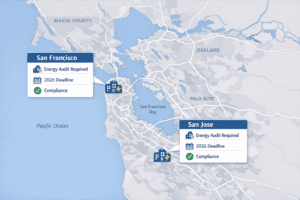
If you manage a commercial building in San Francisco, staying compliant with the city’s Energy and Water Efficiency Program (EBEWE) isn’t just a box to check, it’s an ongoing process that can cost you dearly if neglected. A missed verification, an outdated audit, or an incorrect submission could trigger penalties of up to $100 per day per building.
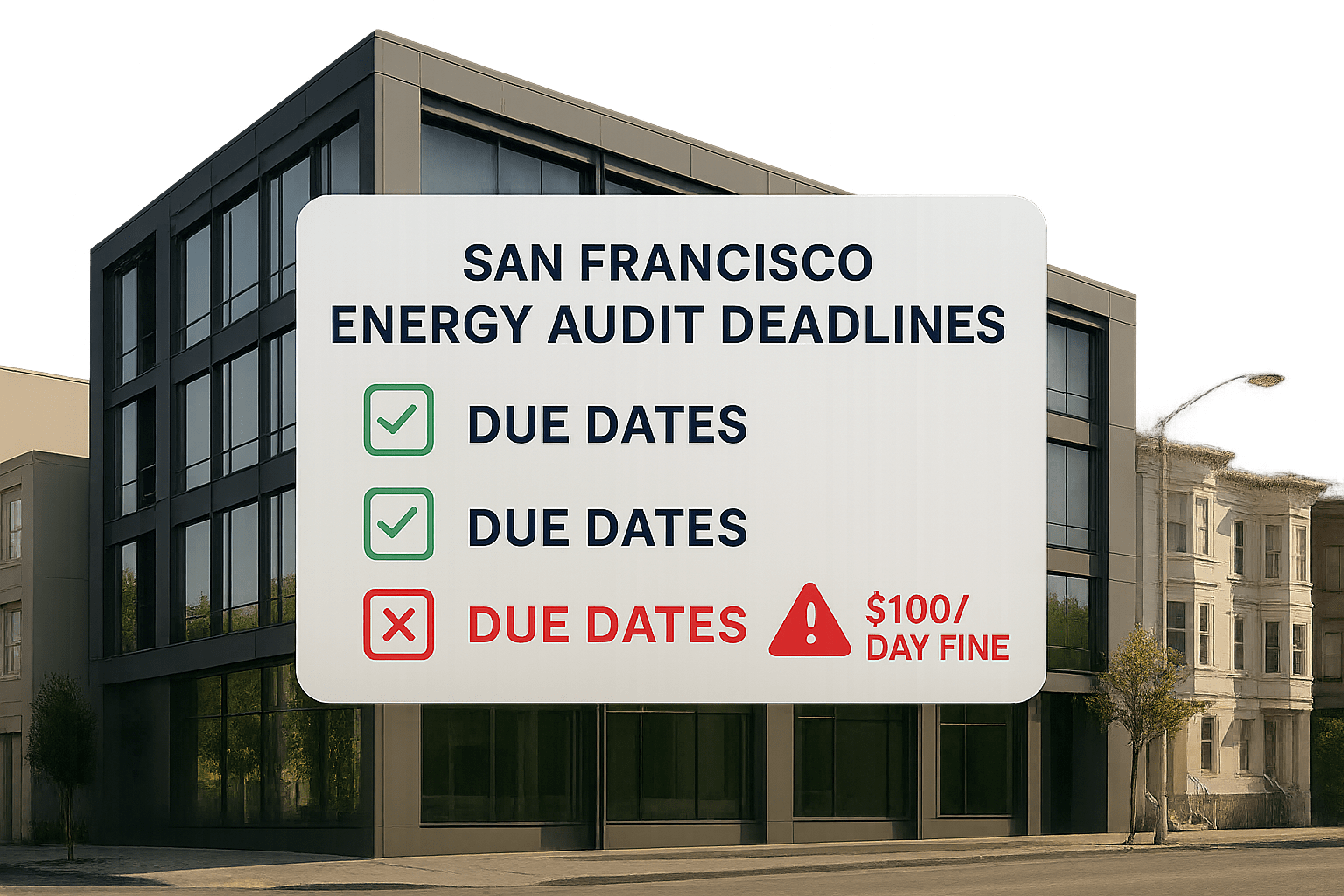
Unfortunately, many property owners assume that once the initial energy audit is submitted, their job is done. But that’s where problems begin. San Francisco requires not just an audit, but proper documentation, verification, and follow-up, and it’s easy to overlook critical steps in the process.
In this article, we’ll guide you through the key actions you must take in 2025 to ensure full compliance and avoid costly mistakes. From confirming your audit timeline to submitting the right A/RCx documentation and leveraging audit tools, we’ve outlined a complete, no-nonsense roadmap to staying ahead.
I. Confirm Your Building’s Audit Cycle & Upcoming Deadlines
The first step to avoiding penalties is understanding when your building’s audit is actually due. Under EBEWE, commercial properties in San Francisco that are 10,000 square feet or larger must submit an Energy Audit or Retrocommissioning (A/RCx) report every five years. That means buildings submitted in 2020 are due again in 2025.
The city does not issue reminders, so if your team isn’t tracking deadlines, you may already be falling behind. Even a short delay in your A/RCx filing can result in daily fines, adding up to thousands per property. These fines are enforced without exception, and waivers are rarely granted.
To avoid this, check your compliance status using the SF Environment compliance portal. If your property has changed ownership, been renovated, or altered in size, your audit cycle may have reset, so confirm any recent activity that might impact your timeline.
Create a compliance calendar that flags key audit and submission dates well in advance. Platforms like VertPro®’s Instant Audit tool can simplify this process by allowing you to pull up your building’s compliance record in seconds. That quick search could save you tens of thousands in avoidable penalties.
II. Submit The Correct A/RCx Documentation, Not Just Any Audit Report
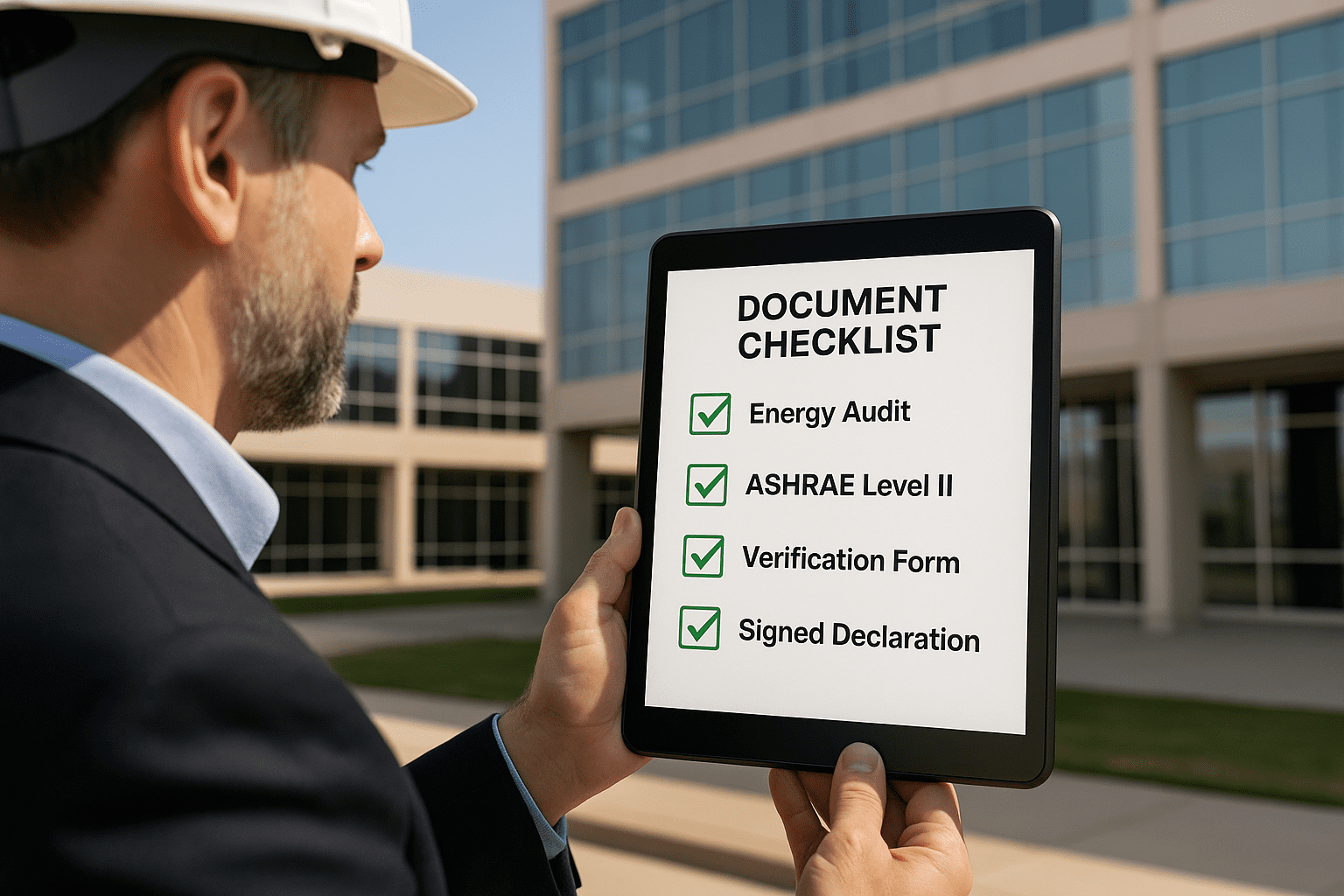
Once your audit is completed, you’re not out of the woods yet. The city requires your documentation to meet specific content, format, and verification standards. Submitting the wrong audit level, missing a declaration form, or failing to clearly show proof of implementation can lead to rejection, and worse, automatic fines if deadlines lapse during the revision process.
It’s important to determine whether your building needs an ASHRAE Level I or Level II Audit, based on its prior submissions and use type. If your building has already undergone a Level I audit in the past cycle, it may now be required to complete a Level II audit. For buildings undergoing Retrocommissioning (RCx), the report must include a detailed list of operational improvements, proposed energy-saving measures, verification steps, and cost-effective recommendations.
A common issue is submitting incomplete paperwork, such as forgetting repair invoices, omitting professional signatures, or providing a report that doesn’t follow EBEWE’s approved templates. Another risk is missing the post-review deadline. If your audit is returned for revisions and you fail to resubmit in time, you may still be fined.
Partnering with experienced energy professionals familiar with San Francisco’s energy code is the best way to ensure compliance. Alternatively, VertPro®’s guided upload workflow helps you double-check your documentation before final submission, reducing the risk of delays or errors.
III. Don’t Forget Verification & Post-Audit Follow-Ups
One of the most overlooked compliance steps is post-audit verification. Submitting the audit alone isn’t enough. If your audit or RCx includes recommendations, such as operational changes, HVAC upgrades, or control system updates, you are required to implement and verify those improvements.
Skipping this step could result in what we call the “silent penalty”, fines that accrue over time because the city considers your audit incomplete, even if the work was actually done. These fines often go unnoticed until an enforcement letter is issued or a future inspection triggers review.
To avoid this, every building owner should maintain a record of:
- Operational changes completed based on audit recommendations
- Dates of implementation for any major upgrades (HVAC, lighting, etc.)
- Supporting documents that show the work was performed (e.g., invoices, permits)
- Verification testing or inspections conducted to confirm performance
A digital tracking system can help ensure nothing slips through the cracks. Platforms like VertPro® offer task-tracking dashboards and automated reminders, so you know when each verification step is due and who on your team is responsible for completing it.
4. Use Digital Audit Tools To Simplify & Speed Up the Process
Managing energy audits across multiple properties is no small task, especially when dealing with staggered deadlines, consultant coordination, and layers of documentation. Manual tracking can quickly become a liability.
That’s where audit management platforms like VertPro®’s Instant Audit make a significant difference.
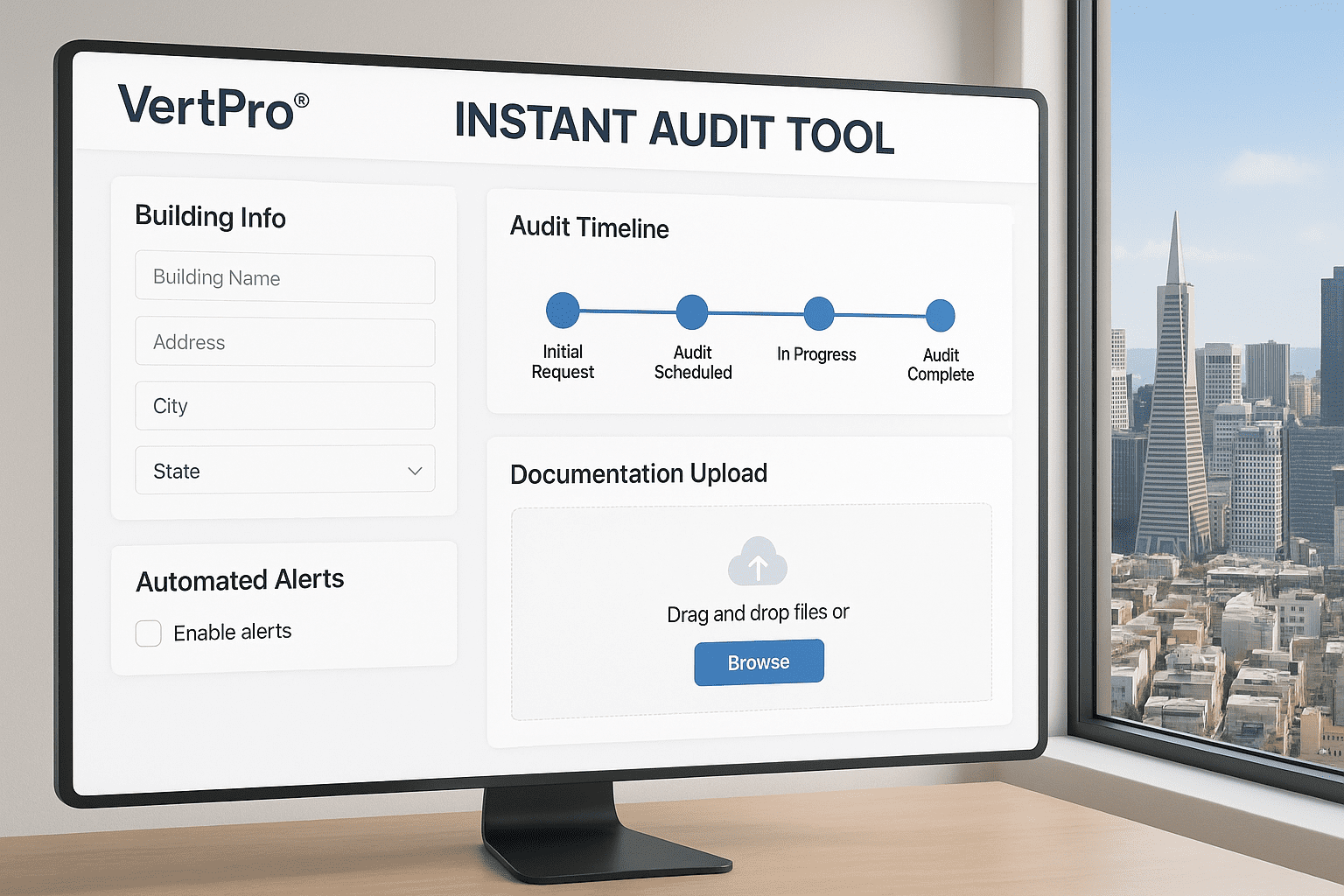
With a digital tool, you can:
- Instantly get a quote for your next audit by entering just a few building details
- Compare prices and scopes from different audit providers in one place
- Track audit progress, submissions, and follow-up verifications
- Store all documentation in a single cloud-based location for easy access
- Set automated alerts for deadlines, renewals, and pending submissions
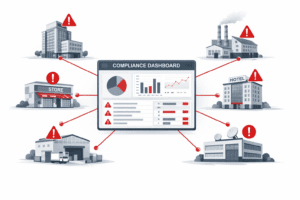
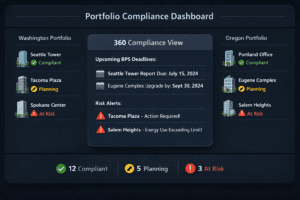
If you manage a portfolio of buildings, the value multiplies. You can monitor the A/RCx status of each property, export reports for stakeholders, and assign tasks to team members or third-party vendors. Instead of managing dozens of spreadsheets or inbox threads, everything lives in one centralized dashboard, audits, deadlines, checklists, and compliance history.
This not only minimizes human error but gives you real-time visibility into your compliance status, reducing the risk of missed steps or surprise penalties.
Final Word: Don’t Let A Small Oversight Trigger A Big Fine
San Francisco’s energy audit requirements are clear: every five years, qualifying buildings must complete and verify an audit or RCx, and submit the proper documentation on time. Yet many buildings still fall out of compliance due to small errors, such as misidentifying audit levels, skipping verification, or missing due dates.
The financial consequences are real: $100 per day per building adds up fast, especially if unnoticed for weeks or months.
The good news? You don’t have to navigate the process alone. With tools like VertPro®’s Instant Audit, you can verify your building’s status, generate accurate quotes, and upload your documentation with confidence. Every step of the audit cycle is simplified, from initial report to final verification, helping you stay compliant, stress-free, and penalty-proof.
Take Control Of Your EBEWE Compliance With VertPro®
VertPro® offers advanced tools and expert guidance to help commercial property owners manage energy audits and benchmarking compliance. Whether you oversee a single building or a national portfolio, our platform helps you:
🔹 Track deadlines and audit cycles
🔹 Submit complete and accurate A/RCx documentation
🔹 Automate alerts and task assignments
🔹 Avoid penalties and simplify reporting
Ready to Stay Ahead of San Francisco’s EBEWE Requirements?
Visit VertPro.com to check your building’s audit status, get a fast quote, and keep your properties fully compliant in 2025 and beyond.